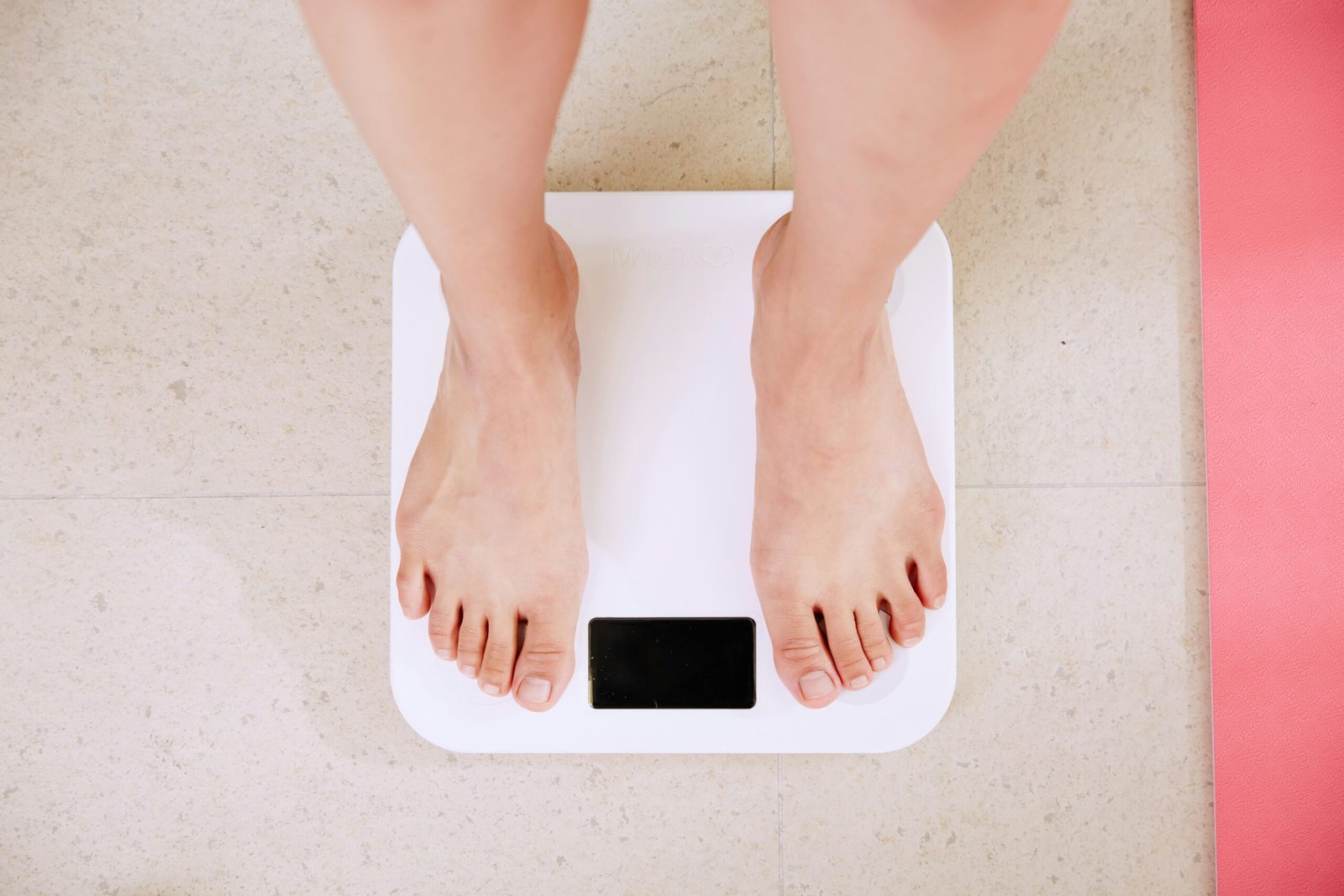
I’m dealing with perimenopause weight gain myself, right now. I’m eating roughly what I’ve always eaten. I’ve even pulled back a little, if anything. And the number on the scale is going up anyway. If you’re nodding along already, this one’s for you.
The bit that made me feel like I was losing my mind
For most of my life, weight was simple math to me: eat less or move more, number goes down. So when I trimmed my portions slightly and the scale crept up instead, my first thought wasn’t “hormones” — it was “what am I doing wrong?” Turns out, probably nothing. That’s the part nobody tells you.
What’s Actually Causing Perimenopause Weight Gain (The Plain-English Version)
As oestrogen drops during perimenopause, your body tends to shift where it stores fat — often more around the middle, even without any change in what you eat. On top of that, oestrogen plays a role in insulin sensitivity, so the same food can be processed a little differently than it used to be.
Add in the natural slowdown in muscle mass that tends to happen with age (muscle burns more at rest than fat does), and you get a body that’s quietly running on different settings than it was five years ago — while looking exactly the same as it always did from the outside.
The NHS notes that perimenopause weight gain is one of the most common body changes largely due to hormonal shifts . None of this means your body is broken. It means the rules changed without telling you. This combination — shifting fat storage, changing insulin sensitivity, less muscle mass — largely drives perimenopause weight gain, even when nothing about your habits has actually changed.
The Stress Loop That Makes Perimenopause Weight Gain Worse
Here’s the bit I found most maddening once I understood it. Watching the number go up is stressful. Stress raises cortisol. Cortisol itself encourages fat storage, especially around the middle — and can also nudge cravings toward exactly the foods that don’t help.
So the stress of the weight gain can quietly feed the weight gain — which is exactly why perimenopause weight gain can feel so much harder to shift than weight gain used to. I’ve caught myself in this loop more than once: I step on the scale, spiral a bit, then “comfort eat” the spiral away, then feel worse for it the next morning.
If stress is part of what’s driving this for you, my post on adaptogens might be worth a read too.
What’s actually helped me pull back from the continuous perimenopause weight gain
I’m not going to pretend I’ve solved this — I’m mid-way through figuring it out myself. But a few things have genuinely made a difference:
Weighing myself less often. Daily weigh-ins were feeding the stress loop directly. I check in weekly now, sometimes less.
Strength training over more cardio. Not because cardio’s bad, but because muscle mass matters more here than it used to, and lifting has done more for how my clothes fit than extra time on the treadmill ever did.
Protein at every meal, not just “eating less.” This was the actual mindset shift for me — from “how do I eat smaller” to “how do I eat in a way that actually supports what my body’s dealing with right now.”
The one free change that’s made the biggest difference
The order I eat things in, not just what I eat. This one surprised me the most. Eating vegetables first, then protein, then carbs — rather than digging into the bread or pasta first — seems to blunt how sharply blood sugar spikes after a meal. Fiber and protein hitting your system first slow down how fast the carbs get absorbed. That helps avoid the sharp rise-then-crash that leaves you reaching for a snack an hour later. I haven’t changed a single ingredient on my plate, just the order I eat it in — and the afternoon “crash and crave” cycle has genuinely eased off. It costs nothing and takes zero extra effort.
Sleep, before anything else. Poor sleep raises cortisol on its own, separate from any stress about weight. Some of my worst weeks have started with a few bad nights, not a bad food choice.
Naming the spiral out loud, even just to myself. “This is the stress-cortisol thing, not a personal failure” has become something I genuinely say to myself mid-spiral, and it helps more than I expected it to.
Why the small stuff matters more than it used to
None of these — the eating order, the protein, the sleep — are dramatic changes. But that’s sort of the point. Big, aggressive diet changes tend to read as more stress to a body that’s already dealing with a lot, and that can just feed the cortisol loop further. The boring, small, sustainable tweaks seem to work better precisely because they don’t ask your body to fight itself.
What I’m not going to tell you
I’m not going to give you a meal plan or a number to hit. Partly because I don’t think one-size-fits-all advice is honest. And partly because I’m not a doctor or a dietitian. If this is hitting you hard, an actual conversation with your GP about your hormones and metabolism is worth more than anything I can offer here.
What I can tell you is this: if you’re doing everything “right” and it’s still not adding up the way it used to, you’re probably not doing anything wrong. Your body’s just running on different rules for a while. I’m learning that in real time right alongside you.
I’ll keep sharing what I’m learning as I go, including the stuff that doesn’t work. If you want that in your inbox rather than scattered across old posts, join the list.
Is perimenopause weight gain something you’re dealing with too? I’d genuinely like to know I’m not the only one — tell me in the comments.
This post may contain affiliate links. If you buy through one, I may earn a small commission at no extra cost to you.
2 Responses